
A burr is proof you reached the edge. It is not proof you finished.
Finishing edges
Skip buying more gear until burr formation, pressure and deburring make sense.
What the burr is telling you
A burr means you have abraded enough steel for the edge to fold over. That is useful evidence. It does not mean the edge is finished. If the burr stays attached, the knife can feel sharp briefly and then fade fast.
Check along the full edge: heel, middle, tip. Beginners often sharpen the middle and politely ignore the heel and tip, which is how you get a knife with regional sharpness.
Deburring on the stone
After raising a burr on both sides, reduce pressure and alternate sides. Use lighter passes. The goal is to weaken and remove the burr without creating a new monster on the other side.
Edge-leading, edge-trailing and stropping-style passes all have uses depending on stone and knife. The beginner rule is simpler: lower pressure, pay attention, test gently.
What stropping does
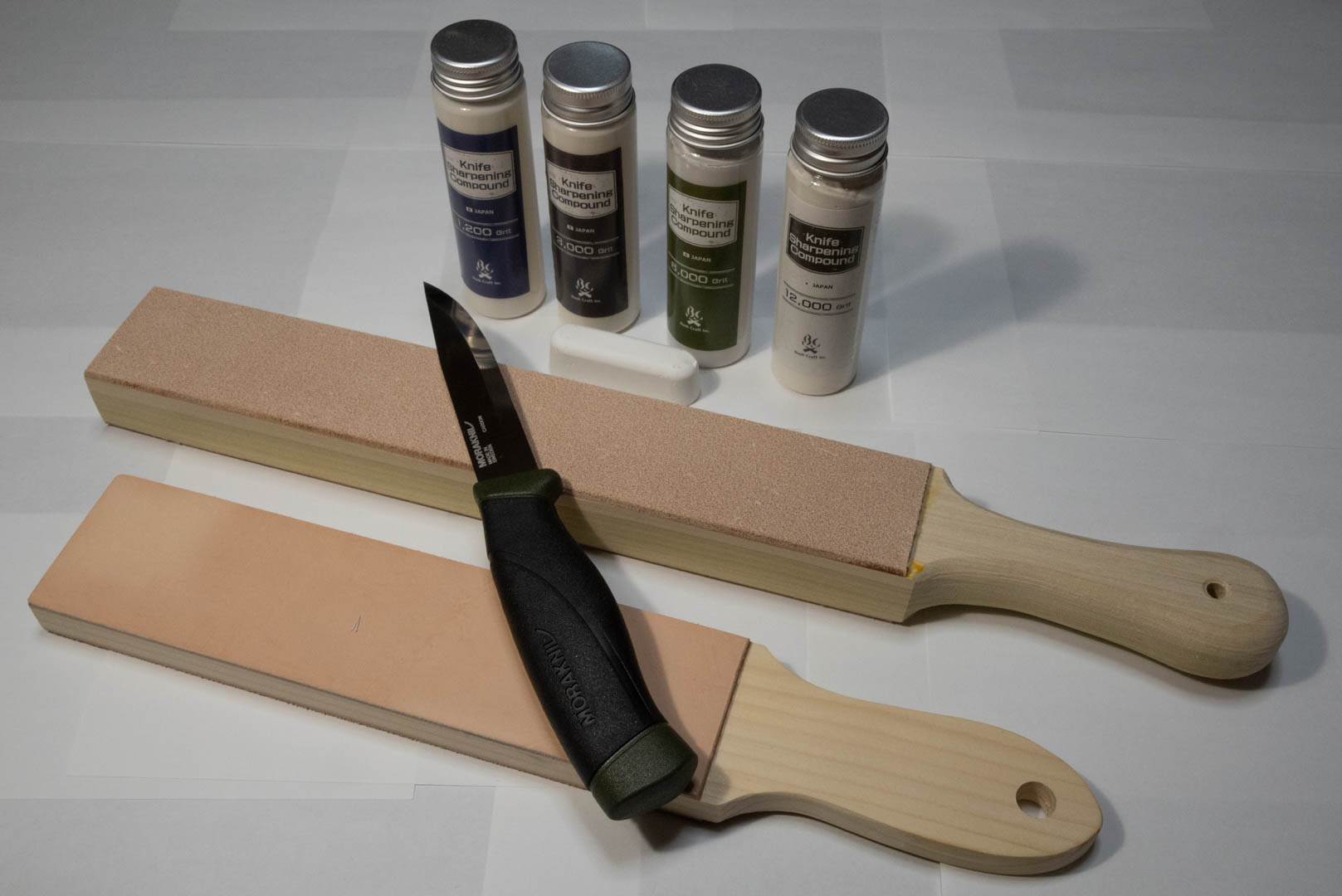
A strop can remove tiny remaining burrs and refine the apex. Plain leather, denim, newspaper or balsa can all work. Compound makes it more abrasive, but it also makes it easier to round the edge if your angle is sloppy.
Use very light pressure. If the strop is flexing around the edge, you may be polishing away the bite you just created. The strop is a finishing tool, not a trampoline.
When to stop
Stop when the edge bites cleanly and predictably. More passes do not automatically mean more sharpness. They can mean more rounding, more wire edge and more opportunity to ruin a perfectly good result.
The grown-up sharpening skill is not endless progression. It is knowing when the knife is ready for food.
Takeaways
- Raise the burr, then remove it.
- Strop lightly and with purpose.
- Stop when the edge works. The onion will not award extra polish points.
Relevant links
Affiliate links may earn commission. Check the exact listing, size and seller before buying.
For removing the last clingy burr. Helpful, cheap, and less dramatic than buying another knife at midnight.
Check current priceA compact setup for stainless gyuto, nakiri and Western chef knives: 1000 for the edge, 3000 for tidy refinement.
Check current priceA simple alternative to leather for controlled final deburring.
Check current priceA gentle board protects thin edges better than glass, stone, bamboo punishment slabs or chaos.
Check current price