
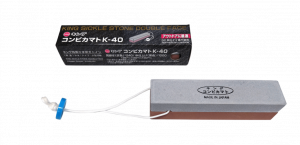
A King stone will not flatter you. That is part of its charm.
Learning sharpening
Skip if you need a claimed hands-on review. This is labelled as researched unless the status says owned.
Why King keeps showing up
King is the old reliable recommendation because it is affordable and understandable. The common King 1000 or 1000/6000 combo gives beginners a medium sharpening surface and, in combo form, a fine side for refinement. Matsunaga lists King Deluxe stones across the familiar kitchen-tool grit range, which is why the brand is easy to build around.
The best thing about King is feedback. The stone feels alive under the knife. You hear it, feel it and see the slurry. For beginners, that can help connect hand pressure to metal removal. A hard stone can feel cleaner, but a softer stone often explains itself better.
The 1000 side does the work
The beginner trap is staring at the 6000 number and thinking it is the sharpness side. It is not. The 1000 grit side makes the edge. It raises the burr, rebuilds the apex and gets the knife cutting again. The 6000 side refines an edge that already exists.
For Western stainless, Victorinox, Mercer, Wusthof and similar, a King 1000 can produce a very practical kitchen edge. For VG10 and harder Japanese stainless, it still works, but you may prefer a faster stone later. Skill matters more than stone branding here. A clean 1000 grit edge beats a badly deburred fancy progression every day.
The maintenance cost
King stones tend to dish faster than harder ceramic stones. That means the middle wears lower than the edges. Keep sharpening on that hollow and your bevels get rounded. Rounded bevels are where sharpness goes to become a theory.
Buy or plan for a flattening plate. Dry the stone properly before storage. Do not keep a soaking stone sealed up like a damp sandwich. If you treat a King stone well, it is a great learner. If you neglect it, it becomes an uneven brick that tells sad stories.
Who should buy King?
Buy King if budget matters, if you want feedback, or if you like the idea of learning with a classic waterstone. It is especially sensible if you are practicing on inexpensive stainless knives before touching your nicer gyuto or nakiri.
Skip King if you know you hate soaking, hate mud, and want the least possible setup. In that case Shapton is probably a better personality match. There is no virtue in buying the romantic choice and then avoiding it because it asks for water and patience.
Verdict
King is a strong first stone when you want value and learning feedback. It will sharpen real kitchen knives, teach burr control and reveal pressure mistakes. It will also dish and require flattening. That is the deal.
If you buy one, use the 1000 side until your edge is genuinely sharp, then use the fine side lightly. Do not polish forever. You are sharpening dinner knives, not summoning a mirror portal.
Takeaways
- King 1000 and 1000/6000 are good budget starter directions.
- The medium grit makes the edge; the fine grit only refines it.
- Softer feedback helps learning but requires flattening discipline.
- Dry properly before storage.
- Great for practice knives and normal kitchen edges.
Relevant links
Affiliate links may earn commission. Check the exact listing, size and seller before buying.
Classic medium-grit learner stone. Good feedback, sensible price, real sharpening ability.
Check current pricePopular combo direction for beginners who want sharpening and refinement in one block.
Check current priceImportant with softer stones. Flat stone, cleaner bevels, fewer mysteries.
Check current priceStability is not optional. A moving stone teaches panic, not sharpening.
Check current price