
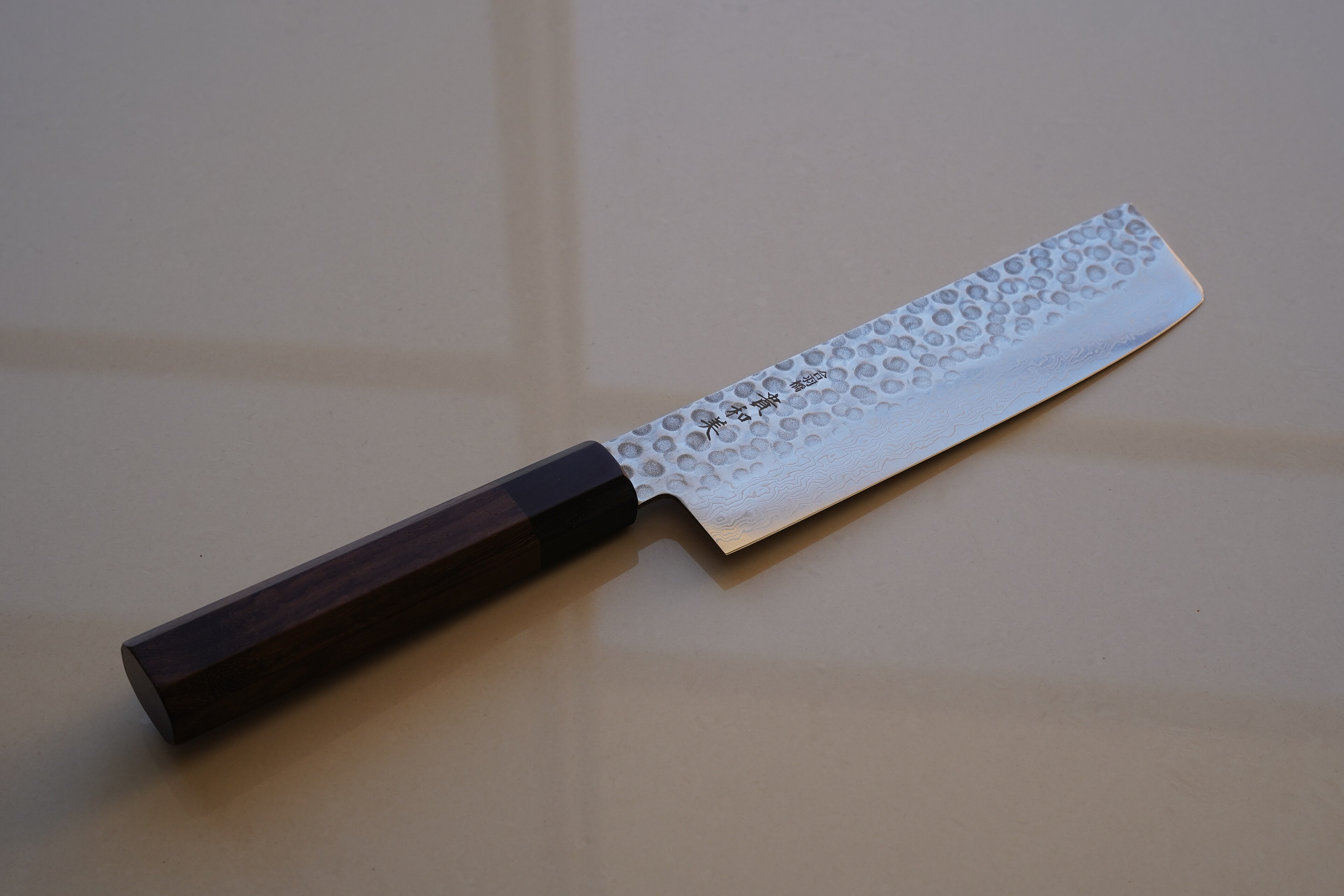
The nakiri makes vegetables feel orderly.
Vegetables
Skip if you want mythology. This note is meant to be practical and source-aware.
The board-contact advantage
A nakiri keeps a long section of edge near the board. That makes it useful for cabbage, spring onions, cucumbers, herbs and other jobs where accordion cuts are annoying.
The tall blade also gives knuckle clearance and works as a scoop when moving vegetables from board to pan. That small convenience matters during weeknight cooking.
What it does not do
A nakiri is not a bone cleaver. It should not be used for poultry bones, frozen food or twisting through hard squash. The rectangular tip also makes it weaker for trimming silverskin, piercing packaging or carving around joints.
Treat it as a vegetable specialist and it makes sense. Treat it as a universal knife and it will disappoint you.
Buying notes
Look for a thin grind, comfortable heel height and an edge that is flat enough for reliable board contact. Stainless steel is the lowest-friction choice for a busy home kitchen because it reduces maintenance anxiety.
Takeaways
- Best for repeated vegetable prep.
- Do not use it as a cleaver.
- Thin geometry beats decorative hammered finishes.
Relevant links
Affiliate links may earn commission. Check the exact listing, size and seller before buying.
Placeholder search link for vegetable knives. Replace with a specific model after you photograph and use it.
Check current priceA bigger, kinder board protects edges better than a small glass or marble surface.
Check current priceCheap edge insurance for drawers, rolls and travel. Measure blade height before buying.
Check current price