
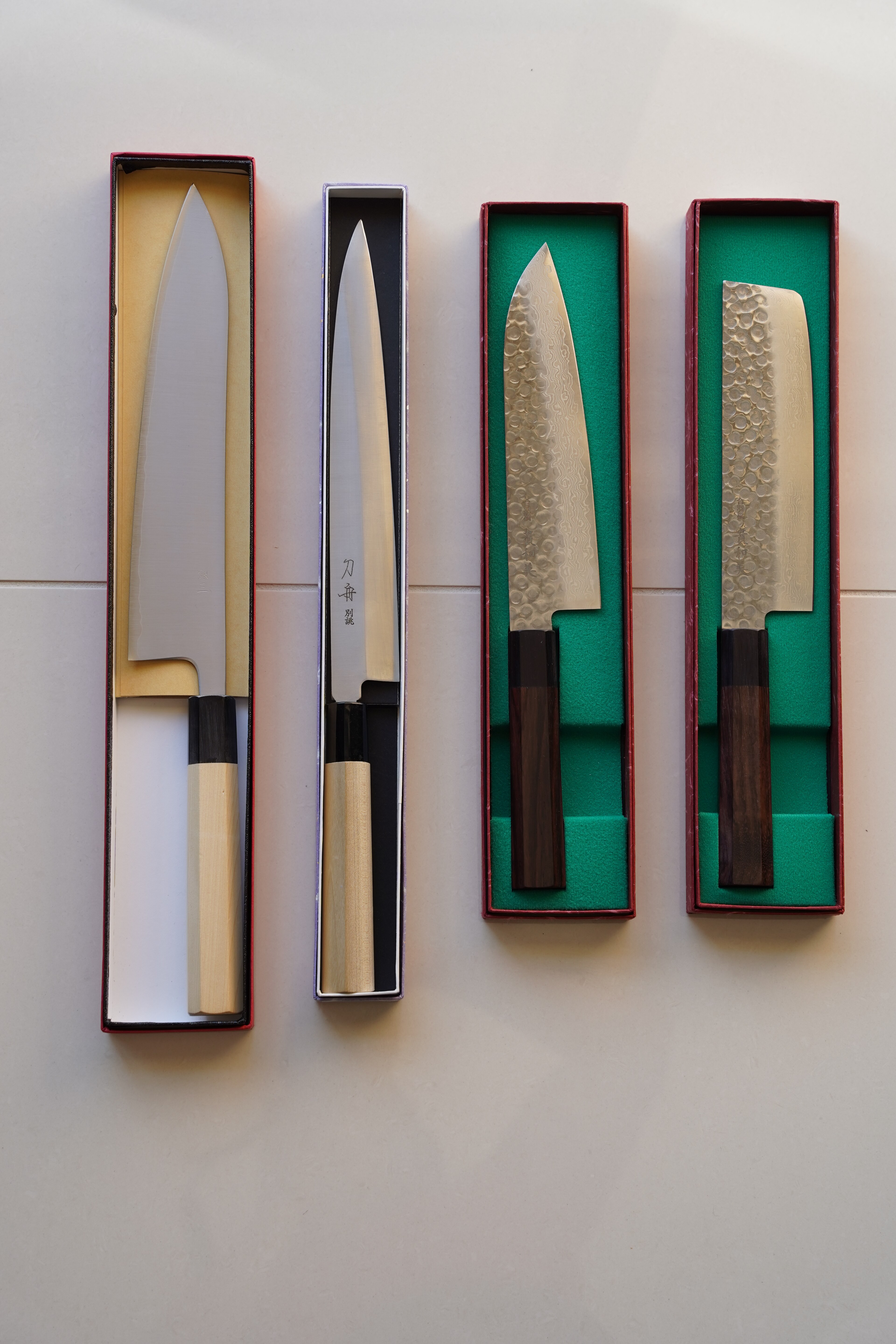
A knife profile is a job description. If the job is vague, the purchase usually is too.
Choosing shapes
Skip if you want mythology. This note is meant to be practical and source-aware.
Start with the work, not the wall of knives
The useful home kit is smaller than the internet wants it to be: one main knife, one small knife and one serrated knife. That can be an 8 inch chef knife or 210mm gyuto, a petty or paring knife, and a bread knife. Everything else should be a response to a real cooking habit, not a display-case daydream.
This is also the safest way to spend affiliate money honestly. A reader who chops onions twice a week does not need a seven-knife block. A reader who preps vegetables every day might deserve a nakiri before a prestige German chef knife. Shape first. Flex later.
The profiles in plain English
A Western chef knife is the forgiving workhorse: curved belly, familiar handle, usually enough weight to feel stable. A gyuto is the Japanese all-purpose equivalent: often thinner, lighter and calmer through vegetables. A santoku is shorter and compact. A nakiri is a flat-edged vegetable rectangle, and I say rectangle with respect.
Petty knives live on the board for lemons, shallots and trimming. Paring knives work in the hand. Bread knives do crust, tomatoes and anything that punishes a plain edge. Boning knives, fillet knives, slicers and cleavers are great when the job is specific. They are not personality replacements.
Steel is not the first question
Steel matters, but it is not magic dust. A stainless VG10 nakiri can be brilliant for low-fuss vegetables because it stays tidy and sharp enough with modest care. A carbon gyuto can be more alive on the board, but it also asks you to wash, dry and pay attention. Ignore that and the knife will write its complaint in orange.
Before steel, ask: how do I cut, what board do I use, how often will I sharpen, and will anyone put this in the dishwasher when I am not looking? That last question has ended many romantic purchases.
The Adrichops buying rule
For this site, the review format is simple: state the source, state whether it is hands-on or a research brief, then explain the maintenance kit that makes the knife make sense. No copied Amazon star counts, no static prices, no borrowed product photos pretending to be experience.
The best content will come from using the blades: onions, carrots, herbs, potatoes, tomatoes, wiping the edge, touching it up, then saying what changed. That is the fun part. The rest is just affiliate plumbing.
Takeaways
- Buy the shape for the work you actually do.
- For low-fuss vegetables, a stainless santoku or nakiri is often more useful than a prestige chef knife.
- Pair every knife recommendation with a board, stone and storage answer.
Relevant links
Affiliate links may earn commission. Check the exact listing, size and seller before buying.
Plain, grippy, Swiss-made chef knife often used as the baseline value pick. Replace this search link with the exact ASIN you want to promote.
Check current priceCommon first Japanese gyuto candidate. Confirm seller, model number and import details before using a direct affiliate link.
Check current priceSmall inexpensive knife category where sharpness, handle comfort and easy replacement matter more than collector appeal.
Check current priceSerrated knives vary by tooth pattern and length. Replace with a model you have used on crusty bread and tomatoes.
Check current price