
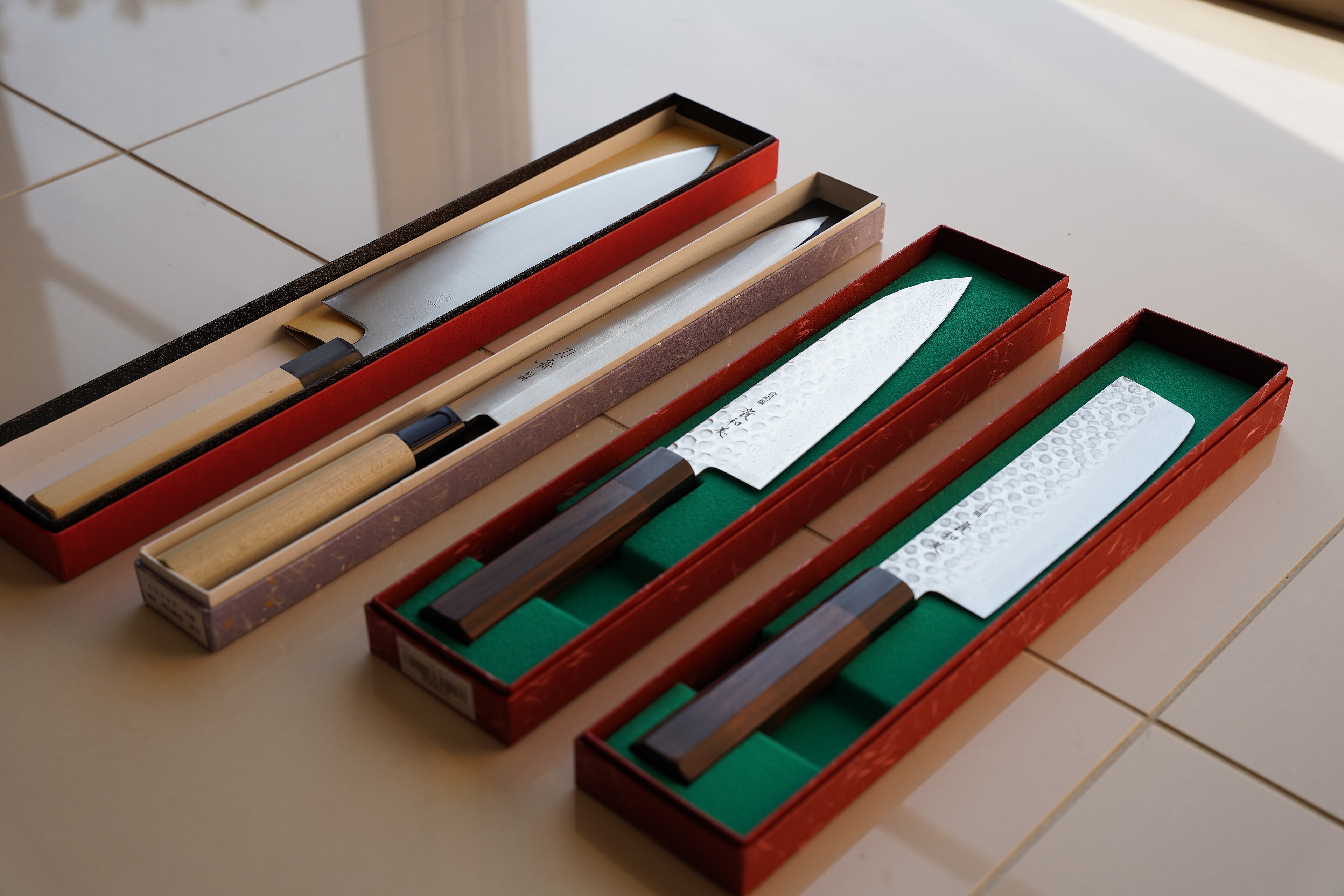
The most honest answer to who made this knife is often: several skilled people, plus a brand that organized the chaos.
Understanding maker labels
Skip if you want mythology. This note is meant to be practical and source-aware.
The blade is a collaboration
In many Japanese knife contexts, one person does not do everything. A blacksmith may forge and heat treat. A sharpener or grinder may shape the bevels and finish. A handle maker may fit the handle. A brand or retailer may specify the line, inspect it, package it and explain it to buyers.
That is why the simple question who made this can become slippery. It might mean who forged it, who sharpened it, whose brand it is, which workshop handled it or which retailer commissioned it.
Smith, sharpener, brand, retailer
The smith matters for steel, forging, heat treatment and core blade character. The sharpener or grinder can matter enormously for how the knife actually cuts, because grind geometry and finish determine food release, thinness and board feel.
The brand matters for consistency, specification and access. The retailer matters for information and aftercare. Good retailers reduce confusion instead of inflating it. That is not glamorous, but neither is buying the wrong knife with excellent vibes.
Why listings can be confusing
A listing might emphasize a famous smith, a house brand, a region, a steel or a finish. None of those are automatically wrong, but each answers a different question. A region label tells you less than a specific maker, grind, steel and retailer description.
If the listing is vague, ask for shape, size, steel, maker or workshop, cladding, grind, handle and care. This is where forum culture is useful: specificity beats hype every time.
How to buy with less confusion
For your first serious Japanese knife, buy from a retailer that explains what the knife is and how to maintain it. A slightly less glamorous knife from a clear listing is often better than a mysterious bargain with a hero photo and no useful detail.
Once you understand the chain, maker names become more meaningful. Until then, do not let a famous name distract from whether the knife suits your cooking and maintenance tolerance.
Takeaways
- Japanese knives often involve multiple specialists.
- Grind and sharpening can matter as much as the smith name.
- Good retailer information is part of the value.
Relevant links
Affiliate links may earn commission. Check the exact listing, size and seller before buying.
A compact setup for stainless gyuto, nakiri and Western chef knives: 1000 for the edge, 3000 for tidy refinement.
Check current priceFor removing the last clingy burr. Helpful, cheap, and less dramatic than buying another knife at midnight.
Check current priceOptional storage oil for reactive carbon blades. Wash and dry first; oil is not a permission slip for damp drawers.
Check current priceSimple protection for drawers, travel rolls and rental-kitchen horror cupboards.
Check current price