
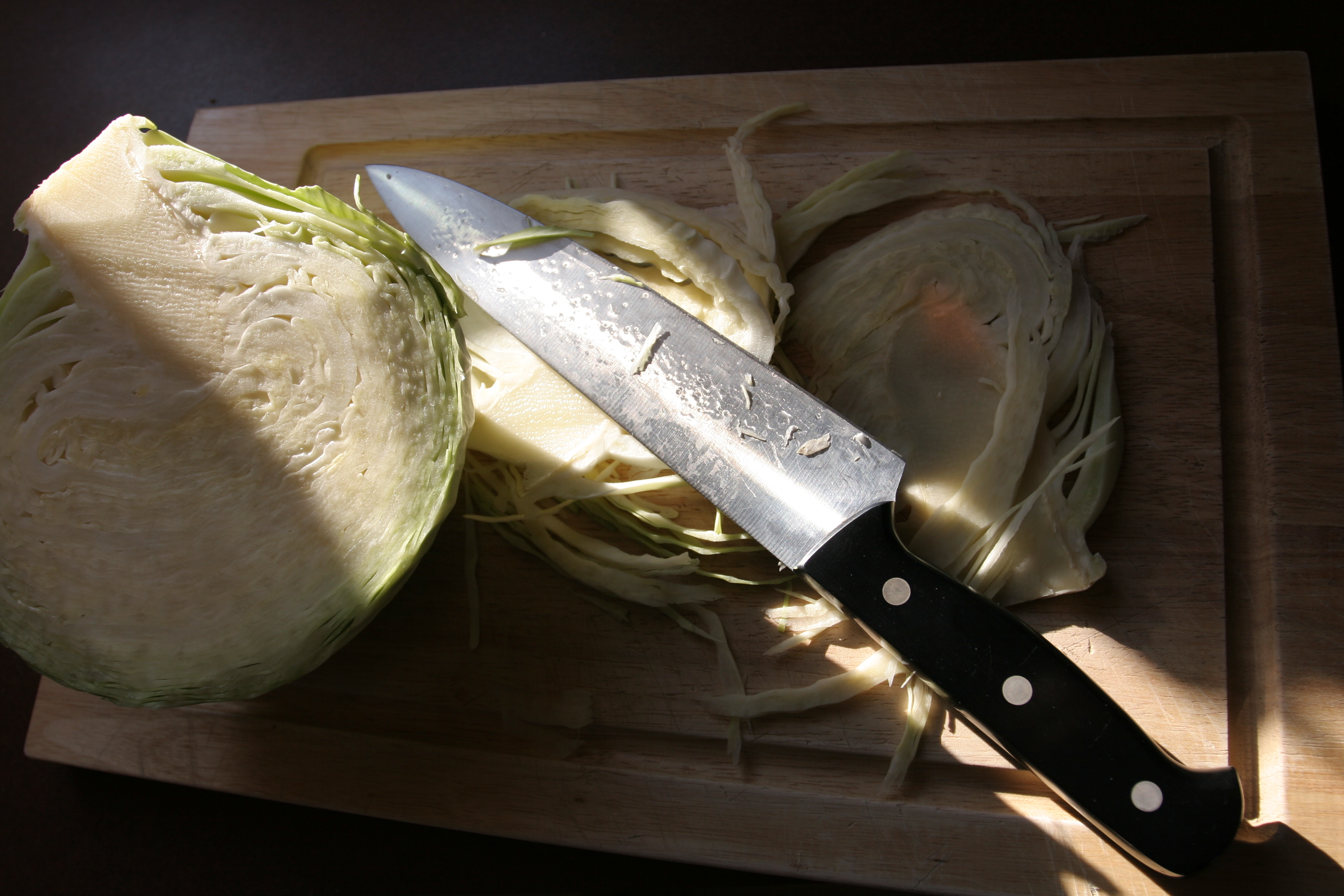
A good board does not make a bad edge good, but a bad board can make a good edge miserable very quickly.
Edge-friendly prep
Skip miracle products. Hand wash, dry, store safely and use a sane board first.
The board is part of the edge system
Knife people love talking about steels, heat treatment and bevels. Correct, all useful. Then someone puts a hard, thin Japanese edge on a glass board and wonders why the apex looks like it had an argument with a pavement. The cutting board is not a neutral stage. It is a consumable contact surface.
The simple version: you want a board with enough give to be kind to the edge, enough stability to feel safe, and enough hygiene sanity that you actually use it. For most home cooks with Japanese-style knives, the shortlist is synthetic rubber, Hasegawa-style soft boards, good wood, or hinoki. This guide focuses on the three Japanese-adjacent options that keep appearing in serious knife discussions and Amazon searches: Hasegawa, Asahi and hinoki.
Hasegawa: soft surface, wood-core cleverness
Hasegawa is the board people recommend when the knife is thin, hard and a little precious. The signature idea is a rigid wood core with an outer synthetic surface. That matters because full rubber or soft synthetic boards can become heavy slabs, while thin plastic boards can feel bouncy, loud and cheap. Hasegawa tries to sit in the useful middle: stable, relatively light and edge-friendly.
The catch is technique. Very soft boards can feel grippy. If you chop straight down, push cut and slice, that grip can be lovely. If you rock hard, twist through the cut or drive the edge sideways because the onion looked at you funny, a soft board can feel like it is grabbing the edge. That is not the board being bad. That is the board reporting your technique in a slightly passive-aggressive way.
Asahi: synthetic rubber with professional-kitchen energy
Asahi Cookin Cut boards are synthetic rubber boards with a wood-like cutting feel. The appeal is not romance. It is grip, sanitation and a cushioned surface that is nicer to sharp edges than hard plastic or glass. Asahi feels like a sensible pro tool: dense, stable, easy to wash, and not trying to become an heirloom object on Instagram.
Forum discussion often frames Asahi as a little different from Hasegawa. Hasegawa tends to be described as softer and very edge-friendly, while Asahi gets praised for protein prep and a firmer, grippy surface. That is why I would think of Asahi as the low-drama board for people who want to cut vegetables, fish and meat without maintaining a wooden board like a bonsai.
Hinoki: traditional, gorgeous, not maintenance-free
Hinoki is Japanese cypress. It smells good, looks good and has a gentle cutting feel. It is also wood, which means it has opinions. You wet it lightly before use, wipe excess water, wash it properly, then dry it with airflow. If that sounds like too much, buy rubber and live peacefully.
The reason hinoki survives in knife culture is simple: it gives under the edge and feels calm under a thin knife. It is especially nice for people who enjoy the ritual side of Japanese knives without wanting every prep session to become a museum tour. The downside is softness. You will mark it. You should not hack bones on it. Aggressive bread knives can saw it up. Treat it like a cutting surface, not a chopping block.
Which one should you buy first?
For low-fuss vegetable prep with a VG10 nakiri or stainless gyuto, I would start with Asahi or Hasegawa. Asahi if you want a firmer, easy-clean rubber surface. Hasegawa if you want maximum edge kindness and mostly push cut or slice. Hinoki if you want the traditional feel and are willing to wet, wash and dry it properly.
Size matters more than people admit. A small premium board is still annoying if your 210mm gyuto constantly runs out of runway. For a main knife, look for something roughly around 40 x 25 cm as a minimum comfort zone, and bigger if your counter can take it. A cramped board teaches bad habits; it makes people twist, lift and steer the edge sideways.
Care rules that keep all three alive
Do not put any of these in a dishwasher unless the specific maker says that exact model can take it. Do not store a wooden board flat while damp. Do not leave rubber boards soaking in a sink like a forgotten shipwreck. Wash, rinse, dry, stand upright, move on with your life.
For hinoki, wet before cutting and dry away from direct heat or sunlight. For Asahi, wash with neutral detergent and dry fully. For Hasegawa, clean according to the maker guidance and avoid treating it like a butcher block. The edge-friendly board is there to preserve the knife, not to absorb every bad decision in the room.
Takeaways
- Low-fuss Japanese-knife board: Asahi rubber or Hasegawa synthetic.
- Traditional feel: hinoki, but only if you will wet, wash and dry it properly.
- Hasegawa suits push cutting and slicing; very soft boards can feel grippy under heavy rocking.
- Avoid glass, stone, marble and hard bamboo boards with thin Japanese edges.
- Buy enough board size for your main knife, not the smallest premium rectangle you can afford.
Relevant links
Affiliate links may earn commission. Check the exact listing, size and seller before buying.
Edge-friendly synthetic board with wood-core construction. Replace the search URL with a specific FSR, FRK or PE listing you trust.
Check current priceSynthetic rubber board direction for a low-fuss, knife-friendly prep surface. Check size and seller before linking directly.
Check current priceTraditional Japanese cypress option. Best for people who will wet before use and dry properly after washing.
Check current priceSimple airflow solves a lot of board problems. Damp boards stored flat are how sadness grows legs.
Check current price