
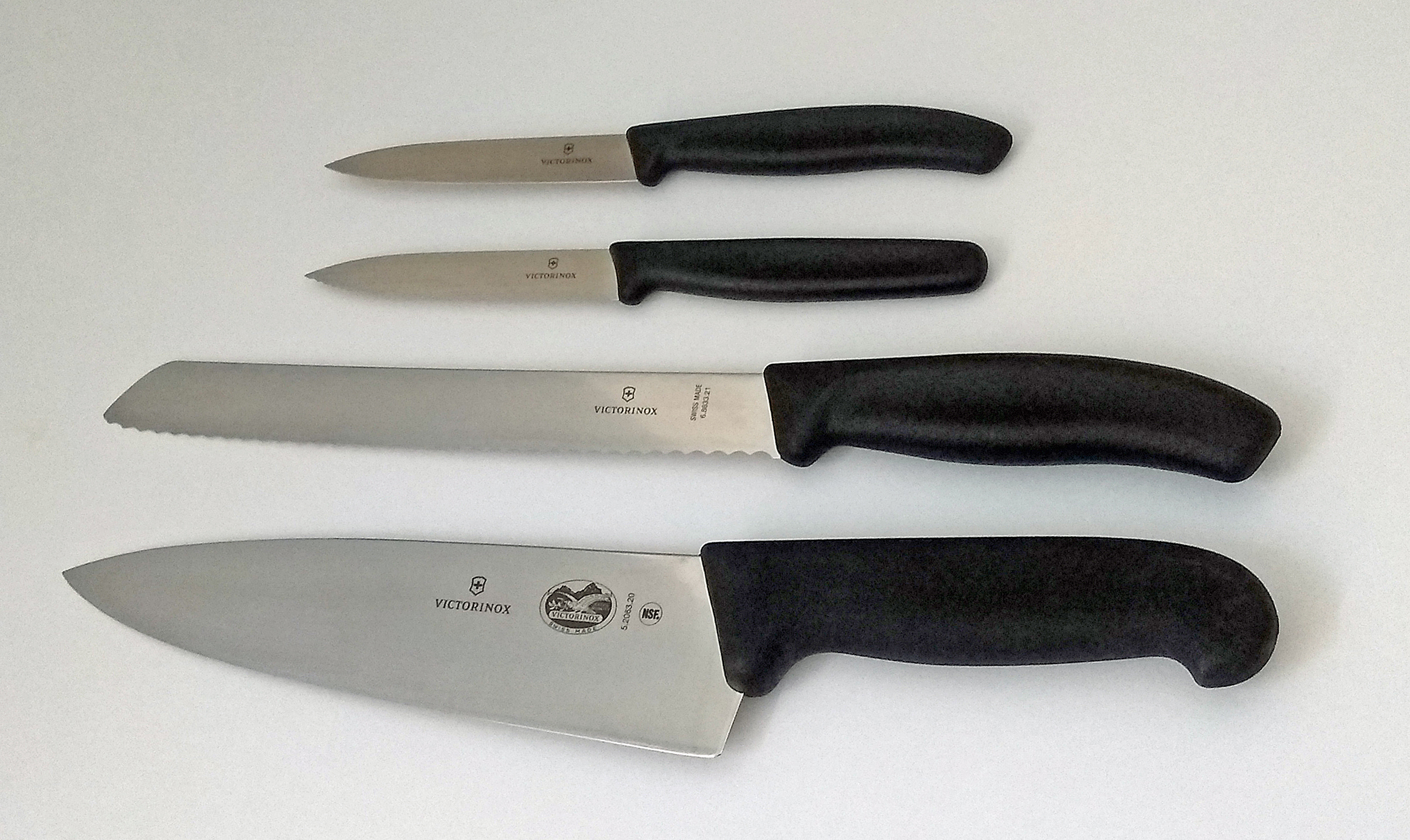
A serrated knife is not a fallback. It is the correct tool for certain textures.
Bread and skins
Skip if you want mythology. This note is meant to be practical and source-aware.
What serrations do
A serrated edge works like a row of small points. It bites into hard crust or taut skin before the main edge follows through. That is why bread, tomatoes and citrus often cut better with teeth than with a dull chef knife.
Length matters. A long bread knife lets the blade glide through a loaf with fewer sawing strokes. A short serrated utility knife is better for tomatoes, rolls and quick lunch prep.
The maintenance problem
Serrated knives are harder to sharpen at home than plain-edge knives. A cheap serrated knife that cuts well for years can be rational, but very soft, bendy or ragged serrations make a mess of crumb and tomato flesh.
When choosing online, look for clear listing photos of the tooth pattern and enough length for the food you actually cut.
Where it fits in the drawer
A bread knife is part of the core trio because a plain-edge chef knife should not be asked to do everything. Keep it dry, keep it protected, and do not let it knock against thinner Japanese blades in a drawer.
Takeaways
- Use teeth for crust, tomato skin and delicate interiors.
- Long bread knives need fewer sawing strokes.
- Serrated sharpening is possible but less beginner-friendly.
Relevant links
Affiliate links may earn commission. Check the exact listing, size and seller before buying.
Serrated knives vary by tooth pattern and length. Replace with a model you have used on crusty bread and tomatoes.
Check current priceCheap edge insurance for drawers, rolls and travel. Measure blade height before buying.
Check current price