
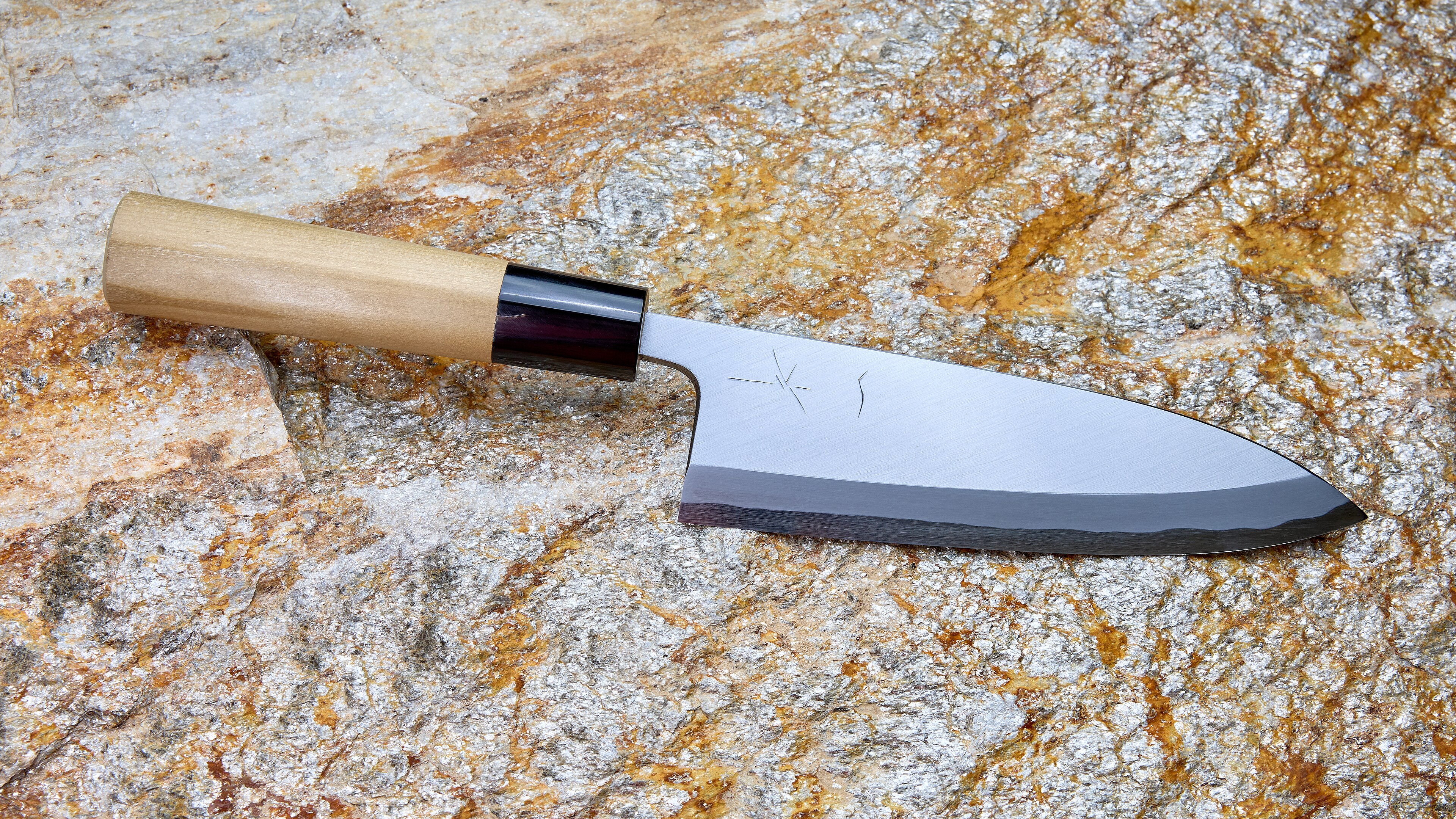
Specialist blades should answer a repeated problem, not a shopping mood.
Specific jobs
Skip if you want mythology. This note is meant to be practical and source-aware.
Boning and fillet knives
Boning knives are for working around joints, seams and bones. A stiffer boning knife helps with meat; a flexible fillet knife follows fish bones and skin more gently. Neither should replace a chef knife for board prep.
Flex is the decision point. Too flexible and meat trimming feels vague. Too stiff and fish work becomes clumsy.
Slicers and carving knives
A slicer is long and narrow so it can pass through cooked meat, fish or roasts in clean strokes. It is not essential for most small kitchens, but it becomes useful if you frequently carve brisket, smoked salmon, roasts or large proteins.
A sujihiki is the Japanese-style slicer profile. A Western carving knife tends to be more familiar and sometimes slightly sturdier.
Asian cleavers, cai dao and Chinese chef knives
Do not confuse a thin Asian cleaver with a heavy meat cleaver. A cai dao, chuka bocho or Chinese chef knife can be a precise vegetable and boneless-protein prep tool: tall blade, flat-ish edge, easy food transfer and a rhythm that feels closer to push cutting than Western rocking.
That is the version worth recommending for cooks who prep vegetables, herbs, tofu and boneless meat on the board. A heavy bone cleaver is a different tool. The listings often blur the language, so inspect weight, spine thickness and intended use before buying. If the listing emphasizes bones, frozen meat or chopping through joints, it is not the thin prep cleaver being recommended here.
Takeaways
- Buy specialists after the core kit is settled.
- Match flex to the meat or fish task.
- Do not confuse a vegetable cleaver with a bone cleaver.
Relevant links
Affiliate links may earn commission. Check the exact listing, size and seller before buying.
Specialist blade placeholder for trimming meat and fish. Keep it separate from chef knife recommendations.
Check current priceUse for light Asian cleavers, Chinese chef knives and cai dao vegetable slicers. Avoid heavy bone cleavers unless that is the explicit job.
Check current priceCheap edge insurance for drawers, rolls and travel. Measure blade height before buying.
Check current price