
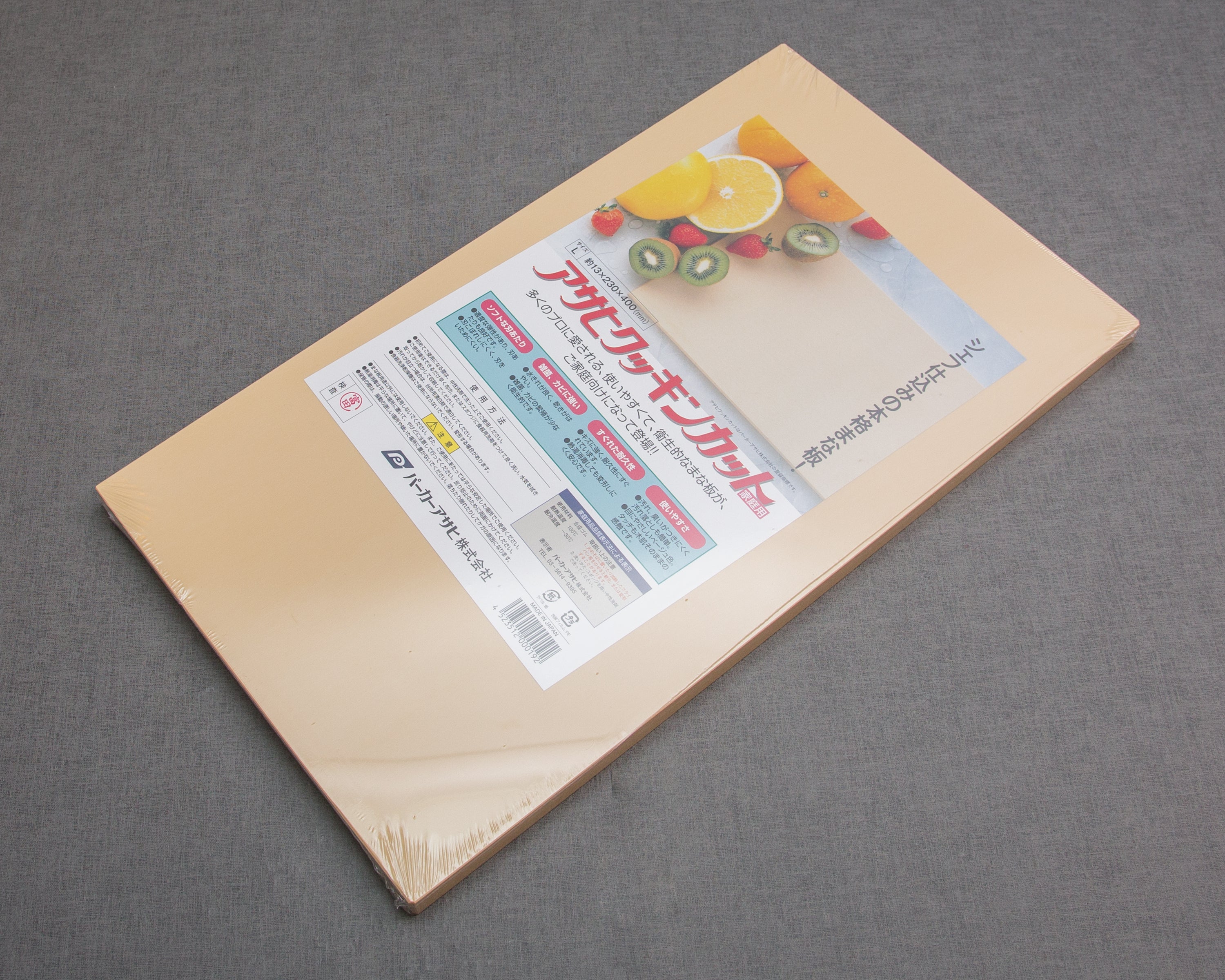
Asahi is what happens when the board stops trying to be furniture and starts acting like a tool.
Low-fuss edge care
Skip if you need a claimed hands-on review. This is labelled as researched unless the status says owned.
The useful version of rubber
A bad rubber board sounds like something from a school cafeteria. Asahi is not that. Parker Asahi describes Cookin Cut as a synthetic rubber chopping board with a wood-like texture, low water absorbance and quick drying behaviour. That is exactly the kind of boring specification that becomes interesting when you cook every day.
Compared with hard plastic, Asahi gives the edge a more forgiving landing. Compared with hinoki, it asks for less ritual. Compared with very soft boards, it can feel firmer and more secure under protein prep. This is why it keeps surfacing in knife circles: not because it is glamorous, but because it makes sense.
Where it shines
Asahi is especially easy to recommend for a low-fuss stainless setup: VG10 nakiri, stainless gyuto, MAC, Global, Tojiro DP, Wusthof, Victorinox, all the usual suspects. It lets the edge land without the brittle click of hard plastic, and it does not need oiling, wet-before-use rituals or emotional support.
For protein, the firmer rubber feel can be reassuring. Forum comparisons often mention Asahi as a good fit for fish or meat prep because ingredients grip the surface well. For vegetables, it is still more than capable. The only real question is whether you prefer the firmer rubber feel or the softer Hasegawa feel under the edge.
Where it is less charming
Rubber boards can hold onto smells if you are careless. Garlic, onion, fish and raw meat do not need much encouragement to become a personality. Wash promptly with neutral detergent, rinse properly and dry fully. Leaving any board wet and dirty is not patina. It is just bad housekeeping with better vocabulary.
Asahi boards can also be heavier than similarly sized thin plastic boards, though that weight helps stability. Measure your sink before getting ambitious. A board that technically fits your counter but cannot be washed comfortably will become an expensive tray for regret.
How I would pair it
For a low-fuss vegetable setup, pair an Asahi board with a stainless or VG10 165mm nakiri, a 1000/3000 or 1000/6000 stone, and a plain strop or deburring block. That is not the flashiest kit. It is the kit that keeps working after the new-knife buzz has worn off.
If you sharpen on a King stone, the board protects the work you put in. If you sharpen on Shapton, same thing, just with less soaking and more speed. The board will not replace sharpening. It slows the edge deterioration caused by impact, bad surface choice and chaotic storage.
Verdict
Asahi is the board I would point at for someone who wants the benefits of a Japanese-knife-friendly surface without the care requirements of wood. It is practical, cleanable and reassuring under a sharp edge. No incense cloud required.
Get the right size, clean it properly and avoid pretending it is a miracle slab. It is a good board, not a legal defence against bad technique.
Takeaways
- Best low-fuss board direction for many stainless Japanese knife setups.
- Firmer and more pro-tool feeling than hinoki; often less grabby than very soft boards.
- Good for vegetables and protein prep if cleaned promptly.
- Wash with neutral detergent and dry fully.
- Measure your sink before buying a large board.
Relevant links
Affiliate links may earn commission. Check the exact listing, size and seller before buying.
Synthetic rubber board direction for sharp kitchen knives. Confirm dimensions and seller before direct linking.
Check current priceDarker Asahi-style option if available. Useful for people who dislike visible staining on pale boards.
Check current priceCare item for rubber and synthetic boards. Avoid scented chaos if you prep fish or fruit on the same surface.
Check current priceKeeps air around both faces after washing. Boring, cheap, useful.
Check current price