
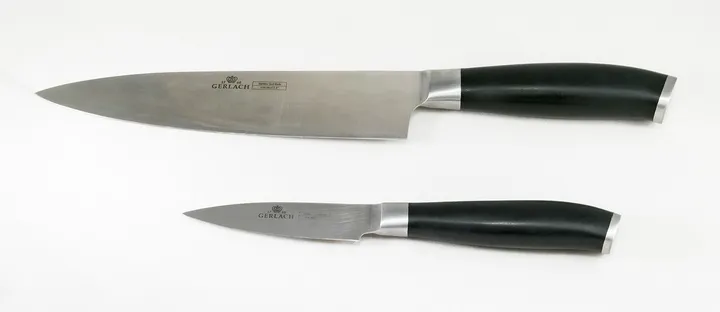
Stainless means stain-resistant
Stainless knife steels resist corrosion because of chromium-rich chemistry, but the edge, scratches and neglected water can still cause staining or pitting. Stainless buys time. It does not buy immunity from bad habits.
For low-fuss home cooks, stainless or stainless-clad knives are usually the sensible route. Check both the core and cladding: stainless cladding does not make an exposed carbon edge stainless.
Carbon reacts because chemistry exists
Carbon steels such as Shirogami and Aogami can sharpen beautifully and take very keen edges, but they react with water, air and acidic foods. That reaction can create patina, and if neglected, rust.
Patina is a stable surface discoloration from use. It can be grey, blue, brown or oddly pretty. Rust is usually orange, active and unwanted. Do not panic at patina. Do not ignore rust.
Oil and storage
For carbon knives, wash and dry after use. For longer storage, a very thin coat of camellia oil or food-safe mineral oil can help by creating a barrier. The blade needs to be dry first. Oiling over water is just making a tiny bad sandwich.
Forum conversations often make this sound more mystical than it is. The practical version is simple: reduce water plus oxygen contact when the knife is resting.
Choosing based on maintenance tolerance
If you want low fuss, choose stainless or stainless clad. If you enjoy care rituals and sharpening feedback, carbon can be wonderful. If other people in your home will leave the knife wet, choose stainless and keep your blood pressure.
There is no moral victory in owning a reactive blade you resent maintaining. The best steel is the one you will actually care for.
Takeaways
- Patina is normal; active rust is not.
- Stainless is easier, not invincible.
- Oil clean, dry carbon steel for storage.