
Low-fuss edge care
This article uses published sources. It does not include my own hands-on test.
Scope of this note
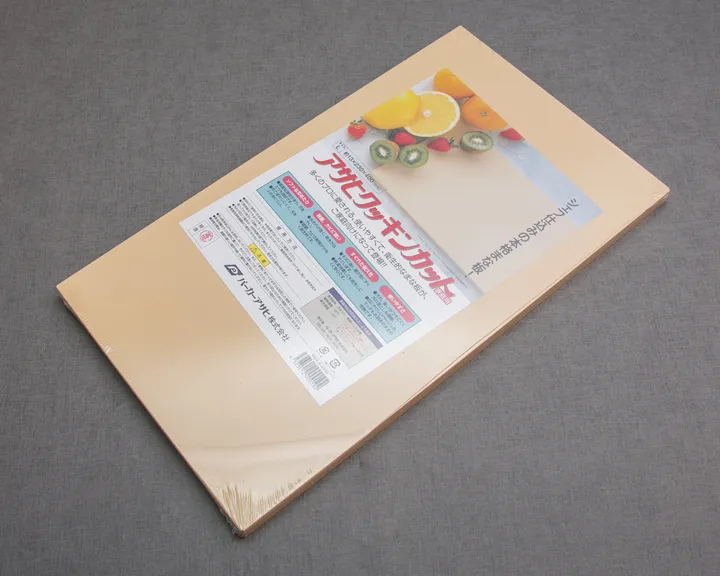
Asahi Cookin Cut is a synthetic-rubber cutting-board range. This note covers what to check before buying; it does not include my own cutting or hygiene tests.
Check the exact model
Compare dimensions, thickness, weight and care instructions. A large board needs to fit your sink and have somewhere to dry. Brand and colour alone do not establish that two listings refer to the same material or range.
What the material does not tell you
Descriptions such as “wood-like” are product descriptions, not a measured comparison here. I have not established whether Asahi feels firmer, releases food better or preserves an edge longer than Hasegawa or hinoki.
Cleaning and storage
Use the cleaning method, detergent and temperature limits specified for the model. Rinse and dry thoroughly, and store with airflow. Do not assume a rubber board can go in the dishwasher or withstand any sanitising method.
Before replacing your board
Start with the problem you need to solve: size, weight, cleaning, stability or a worn surface. If a suitable wood or plastic board already meets your needs, buying a rubber board is optional.
Takeaways
- Check the model, dimensions and maker’s care instructions.
- Compare the delivered price and keep suitable equipment you already own.
- This is researched guidance, not a personal test.
Retailer links
Check the exact model, seller and delivered price. Marketplace searches can include unrelated items.
Check the exact model, dimensions, seller and delivered price.
Search Amazon UKAd · Affiliate link. May earn commission.