
Why the shape works
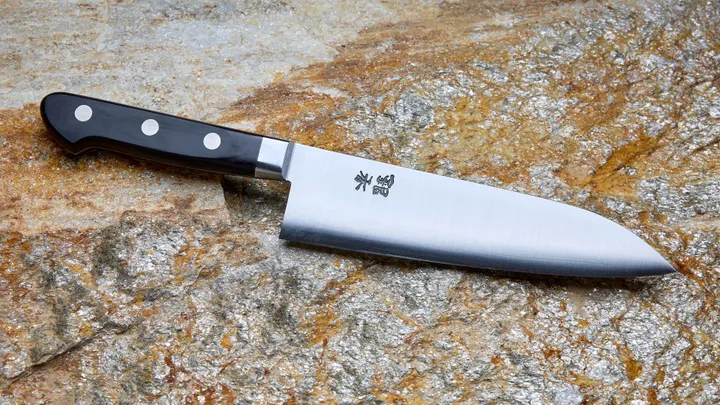
Santoku roughly translates to three virtues, commonly interpreted around meat, fish and vegetables. In practice, it is a compact all-purpose knife with a lower tip, moderate height and a cutting edge that prefers short push cuts over dramatic rocking.
The size is the appeal. A 165mm or 180mm santoku fits smaller boards, shared kitchens and cooks who want control more than reach.
Where it is weaker
The lower tip is not as nimble for trimming and deep point work as a gyuto or chef knife. The profile also has less belly, so a santoku can feel awkward if your default motion is a big rocking cut.
Grantons or hollow dimples can help with sticking in some foods, but they do not override grind quality. A thick santoku still wedges, even if the blade has dimples.
Who should buy it
Buy a santoku if you cook in a small space, prep a lot of vegetables and want a stable blade that does not feel long. Skip it if you already own a gyuto you like and rarely feel cramped on the board.
Takeaways
- Good for small boards and controlled push cuts.
- Not ideal for heavy rocking or precise tip trimming.
- A thin grind matters more than decorative dimples.