
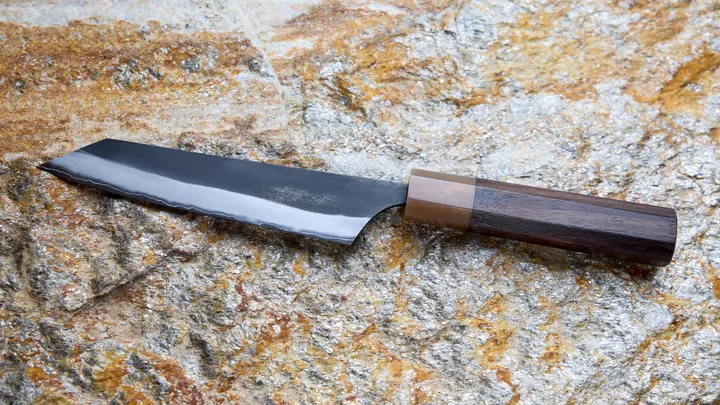
Paring knives
A paring knife is for hand work: peeling fruit, trimming strawberries, scoring, small garnish jobs and quick controlled cuts away from the board. It should be cheap, sharp and comfortable. It does not need prestige steel.
A short spear-point paring knife is often more useful than a decorative mini chef knife because the handle sits close to the task and the tip stays controllable.
Petty knives
A petty is a small board knife, usually around 120mm to 150mm. It handles citrus, herbs, sandwiches, garlic, small onions and proteins when a chef knife feels too large.
The petty is the one small knife that can feel luxurious. It gives some of the precision of a Japanese knife without demanding a full board setup.
Utility knives
Utility knives sit between paring and petty, often with more handle and less height. They are useful in casual kitchens, but they can also be the least necessary shape if you already own a good petty and a good paring knife.
Takeaways
- Paring is for hand work; petty is for board work.
- Do not overspend on a paring knife.
- A 135mm petty pairs well with a 210mm gyuto.